
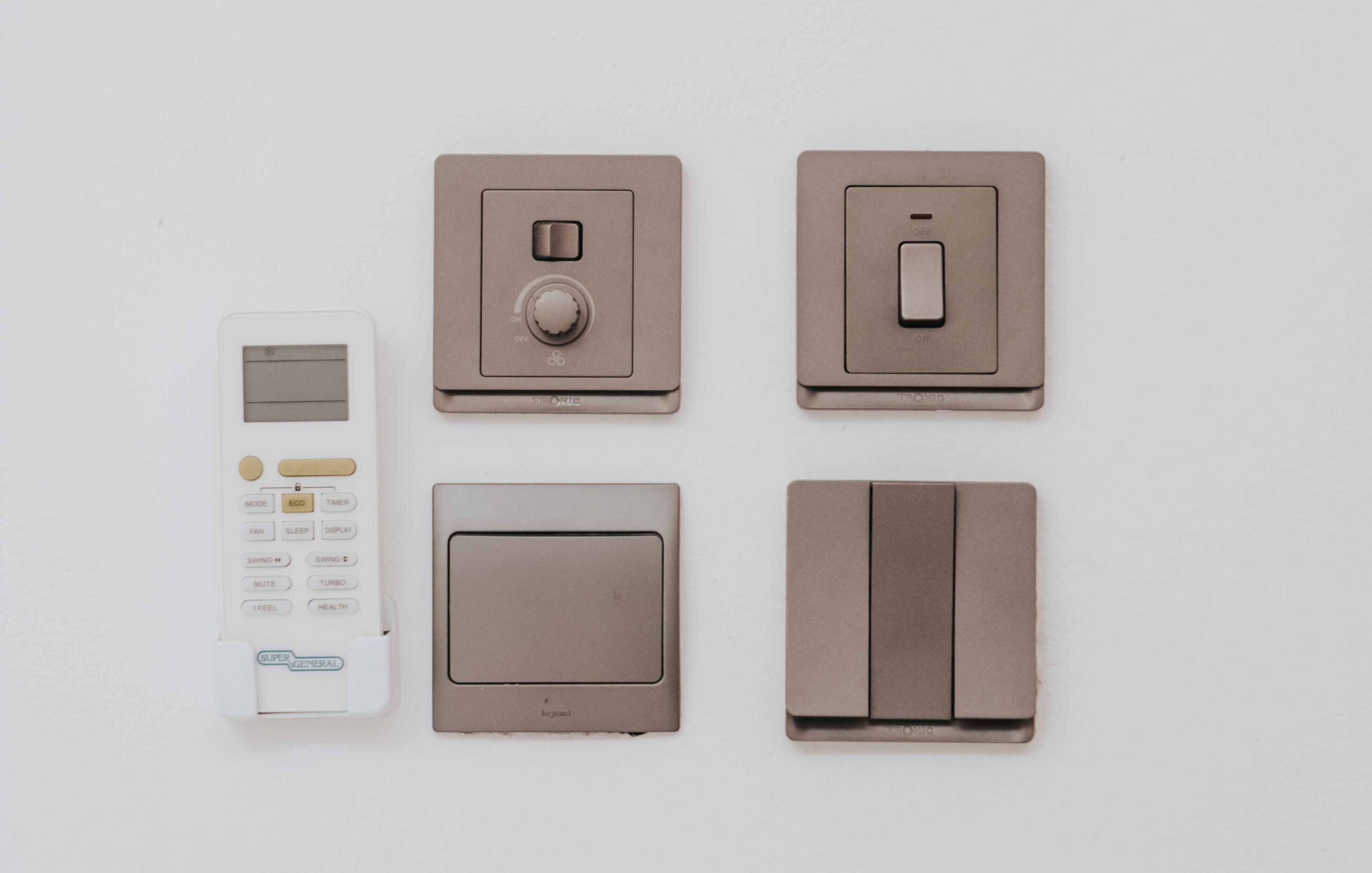
A dimmer switch gives you adjustable light levels and can cut lighting energy use by 20 to 40 percent, while a regular switch simply turns lights on or off at full power. The right choice depends on your room type, bulb compatibility, and how much control you want over your lighting. This guide covers costs, wiring differences, energy savings, and specific scenarios where each switch type wins. Whether you live in Dublin, Westerville, or Upper Arlington, this breakdown will help you decide before calling an electrician.
Understand How Each Switch Type Works
A regular toggle or rocker switch is the simplest electrical device in your home. It completes or breaks a circuit, sending full power to your fixture or cutting it off entirely. There are no moving parts beyond the toggle, and installation is straightforward.
A dimmer switch uses a device called a TRIAC or MOSFET to rapidly cycle the power on and off, reducing the average voltage reaching your bulb. This happens thousands of times per second, so your eye perceives it as a lower light level rather than a flicker.
Modern dimmers are designed specifically for LED bulbs, CFL bulbs, or incandescent bulbs. Using the wrong dimmer with the wrong bulb causes buzzing, flickering, or early bulb failure. Always check the dimmer’s compatibility list before purchasing.
Compare Dimmer Switch vs Regular Switch Side by Side
This table gives you a direct comparison of the most important factors homeowners in Gahanna, New Albany, and Pickerington ask about before upgrading their switches.
| Factor | Dimmer Switch | Regular Switch |
|---|---|---|
| Average cost (device only) | $15 to $80+ | $2 to $15 |
| Installation labor cost | $75 to $150 | $50 to $100 |
| Energy savings potential | 20 to 40 percent | None |
| Bulb compatibility | Must match bulb type | Works with any bulb |
| Lifespan (typical) | 10 to 15 years | 15 to 20+ years |
| Smart home integration | Yes (smart dimmers) | Limited (smart switches) |
| Wiring complexity | Moderate | Simple |
| Best room use | Living rooms, bedrooms, dining | Closets, garages, utility spaces |
Smart dimmers from brands like Lutron Caseta, Leviton Decora, and Kasa can run $40 to $100 per switch but add voice control and app-based scheduling. Standard smart switches for on/off control run $20 to $60. Both require a neutral wire, which older homes in Worthington or Reynoldsburg may not have at every switch location.
Identify Which Rooms Benefit Most From Dimmers
Not every room in your home needs a dimmer. Knowing where dimmers add real value saves you money and prevents over-spending on a full-house upgrade.
- Living rooms: Dimmers let you shift from bright task lighting to a relaxed evening atmosphere without changing bulbs.
- Dining rooms: Adjusting light intensity over a dinner table is one of the most popular dimmer uses. It makes a measurable difference in ambiance.
- Primary bedrooms: Bright overhead lights are jarring at night. A dimmer lets you wind down without switching to lamps.
- Home theaters or media rooms: Lower light levels reduce screen glare and improve viewing comfort.
- Bathrooms: Vanity dimmers are useful for nighttime visits without full brightness, but only use dimmers rated for damp or wet locations.
Regular switches are perfectly fine for utility spaces. Closets, laundry rooms, garages, attics, and pantries do not benefit from dimming. You want full light immediately in those spaces, and the lower cost of a regular switch makes more sense.
Hallways fall in the middle. Many homeowners in Powell and Hilliard choose motion-activated switches for hallways instead of dimmers, getting convenience without the added cost of dimming hardware.
Check Bulb Compatibility Before You Buy
This is the step most homeowners skip, and it causes the most problems after installation. Not all bulbs dim, and not all dimmers work with all dimmable bulbs.
| Bulb Type | Dimmable? | Notes |
|---|---|---|
| Incandescent | Yes | Works with almost any dimmer, but being phased out |
| Halogen | Yes | Compatible with most standard dimmers |
| LED (dimmable) | Yes, with correct dimmer | Requires an LED-compatible dimmer. Check the compatibility list. |
| LED (non-dimmable) | No | Will flicker or buzz if used with a dimmer |
| CFL | Some models only | Mostly phased out. Check packaging before use. |
| Fluorescent (tube) | Requires special ballast | Not practical for most residential dimming setups |
Ohio’s energy codes have encouraged LED adoption statewide, and most homes in Grove City, Bexley, and Canal Winchester have already switched to LED bulbs. If your LEDs are not labeled dimmable on the box, a dimmer switch will not work correctly with them.
Lutron publishes an online compatibility tool where you enter your dimmer model and bulb model to confirm they work together. Leviton offers the same resource. Always check before purchasing either the dimmer or the bulbs.
Know the Wiring and Code Requirements in Central Ohio
Ohio follows the National Electrical Code with local amendments. In Franklin County and surrounding areas, switch installations must use properly rated wire gauges and devices. Dimmer switches have a maximum wattage load rating printed on the packaging, typically 150W, 300W, or 600W for LED-rated models.
Exceeding the wattage rating is a fire hazard and a code violation. If you have six recessed lights on one circuit, add up the bulb wattages and make sure your dimmer can handle the total load.
Some older homes in Grandview Heights and Upper Arlington were built with aluminum wiring or older two-wire systems without a neutral conductor. Many modern smart dimmers and some standard dimmers require a neutral wire to operate. An electrician can assess your existing wiring before you purchase hardware.
Electric Medic handles these assessments regularly across Westerville, New Albany, and Dublin. We check your panel, existing wiring, and switch box depth before recommending any upgrade. Switch boxes in older homes are sometimes too shallow to accommodate a dimmer’s internal components, requiring a box replacement first.
Estimate Real Costs for Installation in the Columbus Area
Pricing for switch installation varies by job complexity, location, and how many switches are being replaced at once. Here is a realistic cost breakdown for central Ohio homeowners.
- Single regular switch replacement: $50 to $90 in labor, plus $2 to $15 for the device.
- Single dimmer switch installation: $75 to $150 in labor, plus $15 to $80 for the device.
- Smart dimmer installation (requires neutral wire check): $100 to $200 in labor, plus $40 to $100 for the device.
- Multi-switch upgrade (5 to 10 switches): Electricians often discount per-switch labor when doing multiple at once. Expect $40 to $80 per switch in labor.
- Wiring upgrade needed: Add $150 to $400 if your switch box requires rewiring or a neutral wire run.
Energy savings partially offset the higher cost of dimmers over time. A 60-watt equivalent LED bulb dimmed to 50 percent uses roughly 30 to 35 percent less energy. Across multiple fixtures used several hours daily, that adds up to noticeable savings on your AEP Ohio or Columbia Gas electric bill over a year.
Electric Medic offers free estimates for switch upgrades throughout the Columbus metro area. Call us before you buy hardware so we can confirm compatibility and give you an accurate total cost upfront.
FAQs on Dimmer Switch vs Regular Switch
Can I replace a regular switch with a dimmer switch myself?
Technically yes, but it involves working inside your electrical panel circuit and requires turning off the correct breaker. In Ohio, electrical work that involves new wiring or circuit modifications requires a licensed electrician. Simple switch swaps are often DIY-friendly, but if you are unsure about your wiring type or neutral wire situation, call a pro.
Will a dimmer switch work with any LED bulb?
No. The LED bulb must be specifically labeled dimmable, and the dimmer must be rated for LED use. Using a non-dimmable LED with a dimmer causes flickering, buzzing, and early bulb failure. Always verify compatibility using the manufacturer’s compatibility chart before purchasing.
Do dimmer switches save money on electricity bills?
Yes, but the savings depend on how much you dim and for how long. Running dimmable LEDs at 70 percent brightness can reduce energy use by 20 to 30 percent for those fixtures. Over a full year across multiple rooms, that can translate to $15 to $60 in savings depending on your usage and AEP Ohio rate.
Are dimmer switches safe for all ceiling fans?
No. Standard dimmer switches should never be used to control ceiling fan speed. Doing so can overheat the fan motor and create a fire hazard. Ceiling fans require a dedicated fan speed controller. Some combo fan and light dimmers exist, but they must be matched to a fan-rated switch kit.
How do I know if my home has a neutral wire at the switch?
Turn off the breaker, remove the switch plate, and look inside the box. If you see a white wire connected to the switch, you likely have a neutral wire present. If only black and bare copper wires are connected, you may not have a neutral. An electrician can confirm this quickly and safely without guesswork.
What is the best dimmer switch brand for LED lights in Ohio homes?
Lutron Caseta and Leviton Decora Smart are the two most reliable brands recommended by electricians in the Columbus area. Both have broad LED compatibility lists, solid warranty support, and work well with smart home systems like Google Home and Amazon Alexa. Avoid off-brand dimmers sold at deep discounts, as they often cause flickering with LED bulbs.
Wrap Up and Next Steps
The dimmer switch vs regular switch decision comes down to where the switch is located, what bulbs you are using, and whether adjustable lighting matters to you in that room. Dimmers cost more upfront but deliver real energy savings and better lighting control in living spaces, bedrooms, and dining rooms.
Regular switches remain the right call for utility spaces, garages, and anywhere you just need reliable on/off control without the added complexity or cost.
If you are ready to upgrade your switches or want an expert to assess your home’s wiring first, Electric Medic is here to help. We serve Westerville, Dublin, Gahanna, New Albany, Hilliard, Grove City, and all surrounding communities. Call us today at (614) 515-9731 to schedule your estimate and get the right switch installed safely the first time.