
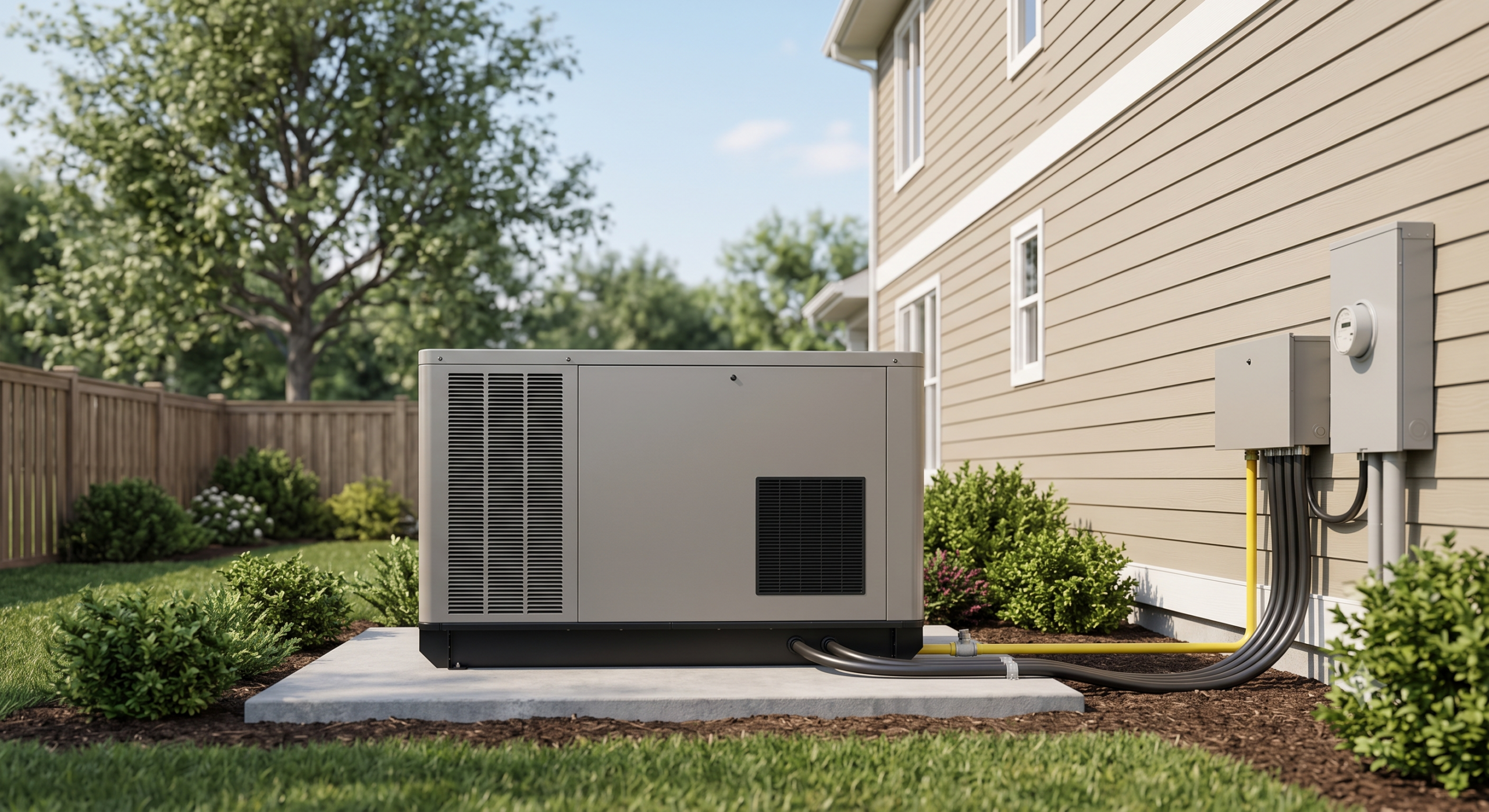
A whole house generator lasts between 20 and 30 years under normal use, though some units exceed that range with consistent maintenance. How long yours lasts depends on the brand, fuel type, how often it runs, and whether it receives annual service. In this guide, we cover every major factor that affects generator lifespan, what warning signs to watch for, and how homeowners across Westerville, Dublin, New Albany, and the greater Columbus, OH area can get the most out of their investment.
Understand What Affects Whole House Generator Lifespan
Not all generators age the same way. A standby generator that only kicks on a few times a year during storms will outlast one that runs continuously through a long Ohio winter outage.
Run hours are the single biggest factor. Most whole house generators are rated for 10,000 to 30,000 total run hours. A unit that averages 200 hours per year could realistically last 50 to 150 years by that math alone, but other wear factors intervene.
Fuel type also matters. Natural gas and propane generators tend to burn cleaner than diesel, which reduces carbon buildup inside the engine over time. Diesel units can last just as long, but they need more frequent oil changes and fuel system maintenance.
Key factors that shorten generator lifespan include:
- Skipping annual maintenance or tune-ups
- Running the generator under heavy load for extended periods
- Allowing the unit to sit unused without exercise cycles
- Ignoring coolant and oil change schedules
- Poor installation that stresses the electrical connections
- Exposure to flooding or standing water around the unit
Ohio weather adds a layer of stress. Harsh winters, humid summers, and severe thunderstorms that roll through Powell, Reynoldsburg, and Canal Winchester put real demand on standby systems every single year.
Compare Lifespans by Generator Type and Brand
Different generator categories have different expected lifespans. Knowing where your unit falls helps you plan maintenance budgets and replacement timelines.
| Generator Type | Average Lifespan | Common Brands | Fuel Type |
|---|---|---|---|
| Air-Cooled Standby | 15 to 20 years | Generac, Briggs and Stratton | Natural Gas / Propane |
| Liquid-Cooled Standby | 20 to 30 years | Generac, Kohler, Cummins | Natural Gas / Diesel |
| Diesel Standby | 20 to 25 years | Cummins, Caterpillar | Diesel |
| Portable Generator (for reference) | 10 to 15 years | Honda, Champion | Gasoline |
Air-cooled units are more common in residential neighborhoods like Hilliard, Worthington, and Upper Arlington because they are compact and affordable. They run hot and wear faster than liquid-cooled models.
Liquid-cooled generators are built for heavier loads and longer runtimes. If your home is large or you run medical equipment, HVAC systems, and a full appliance load during outages, a liquid-cooled unit from Kohler or Cummins is worth the investment for the extended lifespan alone.
Follow a Maintenance Schedule That Extends Generator Life
Regular maintenance is the most direct way to push your generator past the 20-year mark. Generators that receive annual professional service consistently outlive those that do not.
Here is a recommended maintenance schedule for whole house standby generators:
- Weekly: Run the automatic self-test cycle and check for visible leaks or warning lights.
- Monthly: Inspect the battery charge level and clean debris around the unit.
- Every 6 months: Check oil level, air filter, and spark plugs on air-cooled units.
- Annually: Full professional tune-up including oil change, filter replacement, coolant check, load bank test, and transfer switch inspection.
- Every 2 years: Replace the battery on your generator. Cold Ohio winters can drain standby batteries faster than expected.
Electric Medic recommends scheduling your annual generator service before storm season in late spring. Homeowners in Grove City, Gahanna, and Pickerington who keep up with this schedule regularly see their units run reliably well into their second decade.
One often missed step is running your generator under load at least once a month. Simply starting it is not enough. Running it with actual household circuits active prevents oil from degrading and keeps internal components lubricated and calibrated.
Recognize the Signs That Your Generator Is Nearing the End
Even with great maintenance, every generator reaches the point where repairs cost more than replacement. Knowing the warning signs early gives you time to plan instead of getting caught without power.
| Warning Sign | What It Means | Urgency Level |
|---|---|---|
| Frequent starting failures | Battery or starter motor degradation | High |
| Excessive oil consumption | Worn piston rings or seals | High |
| Unusual knocking or vibration | Engine bearing wear | High |
| Visible rust or corrosion on housing | Structural and electrical risk | Medium |
| Output voltage fluctuations | Alternator or control board issues | High |
| Generator runs but trips breakers | Overload or failing transfer switch | Medium |
A good rule is the 50 percent rule. If a repair costs more than 50 percent of the price of a new unit, replacement is usually the smarter financial move. A new air-cooled standby generator runs between $3,000 and $7,000 installed, while major engine repairs can easily hit $2,000 to $4,000 on an older unit.
If your generator is over 15 years old and showing any two or more signs from the list above, call Electric Medic for an honest assessment. We serve Bexley, Grandview Heights, and all surrounding Columbus suburbs and can tell you exactly where your unit stands.
Understand How Ohio Weather Impacts Generator Longevity
Ohio is not easy on outdoor equipment. The central Ohio region experiences temperature swings from single digits in January to high humidity and heat in July and August. This cycle of freezing and thawing stresses gaskets, seals, and fuel lines over time.
In areas like Galloway and Canal Winchester, flooding during heavy rain events is a real concern. A generator installed at ground level without proper grading or a raised pad can take on water during severe storms, which immediately voids most manufacturer warranties and can destroy electrical components.
Proper placement and a weatherproof enclosure make a significant difference. Most modern standby generators come with aluminum or steel enclosures rated for outdoor use, but the pad, drainage, and clearance around the unit still need to meet local code requirements in Franklin County and surrounding jurisdictions.
Extreme cold also affects oil viscosity. In very cold snaps, thicker oil can prevent the engine from cranking fast enough to start. Using the manufacturer-recommended oil weight for Ohio winters and keeping the battery maintained reduces this risk significantly.
Know When to Repair Versus Replace Your Whole House Generator
The repair versus replace question comes up for almost every generator owner at some point. There is no single right answer, but these guidelines help you make a smart decision based on your specific situation.
Consider repair if your generator is:
- Under 10 years old with a documented maintenance history
- Experiencing a single, clearly diagnosed failure like a battery or control board
- Still under an extended warranty
- A liquid-cooled model with a long remaining run-hour life
Consider replacement if your generator is:
- Over 20 years old with no maintenance records
- An older air-cooled unit that has had repeated repairs
- Experiencing engine-level failures like rod knock or crankshaft issues
- No longer supported by the manufacturer for parts
- Consistently failing to start or hold voltage under load
Newer generator models are also significantly more fuel-efficient and quieter than units from 10 to 15 years ago. Homeowners in Upper Arlington and Worthington who replace aging units often find they are paying less to run the new generator while getting better protection and quieter operation for the neighborhood.
Electric Medic handles both generator repair and new installation across the Columbus metro area. Our team gives you a straight answer on whether fixing your current unit makes sense or whether a new installation will serve you better long-term.
FAQs on How Long a Whole House Generator Lasts
How long does a Generac whole house generator last?
A Generac air-cooled standby generator typically lasts 15 to 20 years with annual maintenance. Generac liquid-cooled models can reach 20 to 30 years. Following Generac’s recommended service intervals is the biggest factor in reaching the top of those ranges.
Does running my generator more often shorten its life?
Yes, total run hours affect engine wear over time. Most residential standby generators are rated for 10,000 to 30,000 run hours. Frequent and prolonged use during extended outages adds up, which is why annual oil changes and filter service matter more for homes that rely on their generator often.
What is the average lifespan of a standby generator in Ohio?
In Ohio, most standby generators last 15 to 25 years depending on the model and maintenance history. Ohio’s freeze-thaw cycles and humid summers add wear on seals and gaskets, so local homeowners benefit from twice-yearly inspections rather than annual-only service.
Can I extend my generator’s life past 20 years?
Yes, many liquid-cooled generators reach 25 to 30 years with diligent maintenance. Replacing wear items like batteries, spark plugs, and belts on schedule, keeping the unit clean and dry, and having a licensed electrician inspect the transfer switch annually all contribute to a longer service life.
How do I know if my old generator is still safe to use?
Have a licensed electrician perform a load bank test and inspect the transfer switch, control board, and all electrical connections. Voltage fluctuations, burning smells, and frequent fault codes are signs the unit may be unsafe or unreliable. Electric Medic offers generator assessments throughout the Columbus area.
What maintenance does a whole house generator need each year?
Annual maintenance should include an oil and filter change, spark plug inspection, air filter replacement, battery test, coolant check on liquid-cooled units, and a load test. A full transfer switch inspection by a licensed electrician is also recommended to ensure safe automatic switching during outages.
Wrap Up and Next Steps
A whole house generator lasts 20 to 30 years when properly maintained, and the biggest variable is always the quality of care it receives. Knowing your unit’s type, age, and service history puts you in control of that lifespan.
If your generator is aging, overdue for service, or showing warning signs, Electric Medic is here to help. We serve homeowners throughout Westerville, Dublin, Hilliard, Pickerington, and the entire Columbus metro area with honest generator assessments, repairs, and new installations.
Call Electric Medic today at (614) 515-9731 to schedule a generator inspection or get a quote on a new whole house standby system. Do not wait until the next outage to find out where your generator stands.